When speaking of Hanoi, it is impossible not to mention Hoan Kiem Lake, a destination deeply intertwined with the history and cultural identity of Vietnam’s thousand-year-old capital. Like a tranquil green heart in the city center, Hoan Kiem Lake captivates visitors with its poetic beauty and peaceful atmosphere. In this article, join MIA.vn in discovering one of Hanoi’s most iconic symbols.
1. Overview of Hoan Kiem Lake
Contents
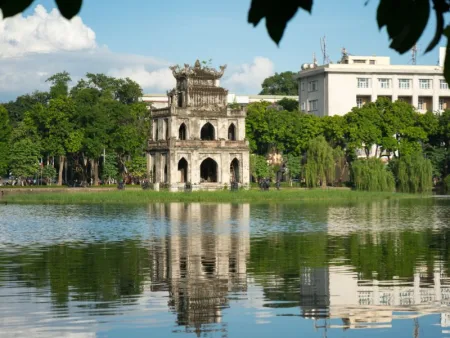
Hoan Kiem Lake, also known as Ho Guom, is a natural freshwater lake located in Hoan Kiem Ward, at the very center of Hanoi. Covering an area of approximately 12 hectares, the lake has been known by several names throughout history, including Luc Thuy Lake (due to its year-round green water), Thuy Quan Lake (used for naval reviews), and Ta Vong and Huu Vong during the late Le dynasty.
The name “Hoan Kiem,” meaning “Lake of the Returned Sword,” appeared in the early 15th century and is associated with the legendary story of King Le Loi returning a divine sword to the Golden Turtle.
Hoan Kiem Lake plays a vital role as a connector between Hanoi’s Old Quarter—home to streets such as Hang Ngang, Hang Dao, Cau Go, Luong Van Can, and Lo Su—and the French Quarter developed over a century ago, including Bao Khanh, Nha Tho, Trang Thi, Hang Bai, Dinh Tien Hoang, Trang Tien, Hang Khay, and Ba Trieu. This prime location makes the lake a meeting point between traditional charm and modern urban life.
For generations, Hoan Kiem Lake has been a symbol of Hanoi and an unmissable destination for both domestic and international travelers. Walking around the lake, visitors can enjoy fresh air, cool breezes, and the calm reflection of ancient trees mirrored on the water’s surface.
2. The Legend of Ho Guom
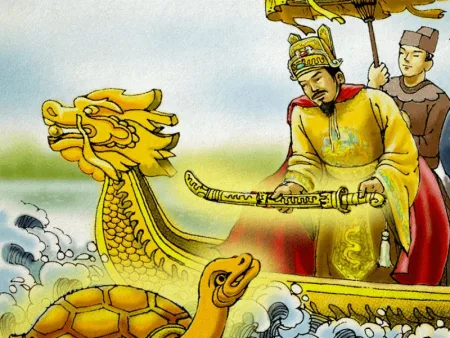
Hoan Kiem Lake is inseparable from the legend of King Le Loi returning the magical sword to the Golden Turtle. This legend has been passed down through generations and symbolizes the resilience, independence, and patriotism of the Vietnamese people.
According to legend, in the 15th century, during the Lam Son uprising against the Ming invaders, Le Loi discovered a radiant sword blade and hilt engraved with the words “Thuan Thien” and “Loi.” Believing it to be a heavenly gift, he assembled the sword and named it Thuan Thien. With this divine weapon, the Lam Son army achieved decisive victories and expelled foreign invaders from the country.
In early 1428, after ascending the throne as King Le Thai To, Le Loi sailed on Ta Vong Lake. Suddenly, the Golden Turtle emerged and asked for the sword’s return. Understanding its meaning, the king handed over the sword, which flew into the sky and disappeared near what is now Turtle Tower.
This legend represents unity, courage, and unwavering national spirit, with the sword symbolizing strength and faith in ultimate victory.
3. Attractions Around Hoan Kiem Lake
3.1 Turtle Tower
Standing majestically on Turtle Islet in the middle of the lake, Turtle Tower is one of Hanoi’s most iconic landmarks. Built between 1884 and 1886, the tower reflects a blend of French architectural influence and traditional Vietnamese details.
The rectangular tower consists of three tiers that gradually narrow upward. Its arched doorways, curved finials, and five-pointed star at the top contribute to its distinctive silhouette. Over time, Turtle Tower has become a cultural emblem, frequently appearing in poetry, paintings, and photography.
3.2 Ngoc Son Temple
Constructed in the 19th century, Ngoc Son Temple represents the spiritual and architectural essence of Vietnamese beliefs. The temple features traditional curved roofs, intricately carved gates adorned with dragon and phoenix motifs, and a serene interior housing statues of deities and revered figures.
3.3 Pen Tower and Ink Slab Pavilion
Located on the northeastern shore of the lake, Pen Tower and Ink Slab Pavilion were built in 1865 under King Tu Duc’s reign. Together, they symbolize Vietnam’s long-standing tradition of scholarship and respect for learning.
3.4 The Huc Bridge
The Huc Bridge is a striking red wooden bridge connecting the lakeshore to Ngoc Son Temple. Built in 1865 by scholar Nguyen Van Sieu, the bridge’s name means “Gathering the Morning Sun.” Its graceful curved shape enhances the lake’s poetic charm.
3.5 Hanoi Opera House
Located on August Revolution Square, the Hanoi Opera House was built by the French in 1901. With its classical European façade, grand columns, and ornate interiors, the opera house remains one of Hanoi’s most impressive architectural landmarks and a major venue for cultural performances.
3.6 Hanoi Old Quarter
The Hanoi Old Quarter, consisting of 36 traditional streets surrounding Hoan Kiem Lake, preserves the city’s historic soul. Characterized by narrow tube houses dating from the 19th and 20th centuries, the Old Quarter offers visitors a vivid glimpse into Hanoi’s traditional urban life, shopping culture, and iconic street food.
3.7 Thang Long Water Puppet Theatre
Founded in 1956, the Thang Long Water Puppet Theatre is the first and most renowned water puppetry theater in Vietnam. Its performances showcase classic folk tales such as Trang Quynh and The Legend of Betel and Areca, introducing this unique art form to audiences worldwide.
3.8 Ba Kieu Temple
Also known as Thien Tien Dien, Ba Kieu Temple was built during the 17th-century Le Trung Hung period. Located at 59 Dinh Tien Hoang Street, the temple is dedicated to Mother Goddess Lieu Hanh, an important figure in Vietnamese folk beliefs.
3.9 Hoa Phong Tower
Hoa Phong Tower is a rare remaining structure of Bao An Pagoda, built in the 19th century. The square tower, with three diminishing tiers, stands as a historical witness to Hanoi’s architectural and cultural evolution.
3.10 King Le Temple
Situated on the western shore of the lake, King Le Temple honors King Le Thai To and other Le dynasty rulers. The site features traditional Vietnamese architecture and a prominent statue of the king holding his sword.
3.11 Dong Kinh Nghia Thuc Square
Dong Kinh Nghia Thuc Square connects several famous Old Quarter streets. Designed as a circular plaza with a central fountain and LED screen, it is a vibrant gathering place and a venue for major public events during holidays and festivals.
4. Best Time to Visit Hoan Kiem Lake
Each season brings a distinct charm to Hoan Kiem Lake. Spring offers blooming peach blossoms and pleasant weather. Summer provides a refreshing escape from the heat, while autumn is widely regarded as the most beautiful season, with clear skies and cool air. Winter adds a quiet, poetic atmosphere to the lake’s surroundings.
5. Dining Around Hoan Kiem Lake
The area around the lake is renowned for its diverse food culture, from traditional dishes like bun cha to famous ice cream brands such as Trang Tien and Thuy Ta, as well as dessert streets like To Tich.
6. How to Get to Hoan Kiem Lake
Visitors can easily reach the lake on foot from the Old Quarter, by motorbike taxi, rental bicycle, or public bus routes 09, 14, and 36. Each option is affordable and convenient for exploring the city center.
7. Useful Travel Tips
Walking is the best way to explore the lake area. Always confirm prices before using services like cyclo rides. Shopping is more convenient in the afternoon, and booking accommodation near the Old Quarter or the lake is recommended, especially during peak seasons.
8. FAQ – Frequently Asked Questions About Hoan Kiem Lake
When did Hoan Kiem Lake get its name?
The name dates back to the 15th century and originates from the legend of King Le Loi returning the sword.
What attractions are near the lake?
Notable sites include Turtle Tower, Ngoc Son Temple, The Huc Bridge, Ba Kieu Temple, Hanoi Opera House, and the pedestrian street area.
What food can you find around Hoan Kiem Lake?
The area offers pho, bun cha, bun thang, street snacks, Trang Tien ice cream, and various local specialties.
What activities are available at Hoan Kiem Lake?
Visitors can explore historical landmarks, watch water puppet shows, stroll through the Old Quarter, and enjoy the weekend pedestrian zone.
Hoan Kiem Lake remains an ideal destination for those wishing to understand Hanoi’s history, culture, and everyday life. With this guide, we hope you enjoy a memorable visit to this iconic landmark.